Lead Generation: The Key to Acquiring More Customers

Personalization is now the true cornerstone of modern lead generation. In a market saturated with information, intrusive advertising, and repetitive content, potential customers expect a tailored experience. They are not simply looking for products or services: they are looking for precise answers to their specific needs.
“Lead quality matters more than quantity: it is better to have fewer contacts who are truly ready to convert.”
Companies that deliver highly relevant content and offers, based on real data and behavioral analysis, are far more likely to transform anonymous visitors into qualified contacts and ultimately into customers. In this context, lead generation is no longer just a marketing activity, but an integrated system that combines SEO, advertising, analytics, CRM, and automation.
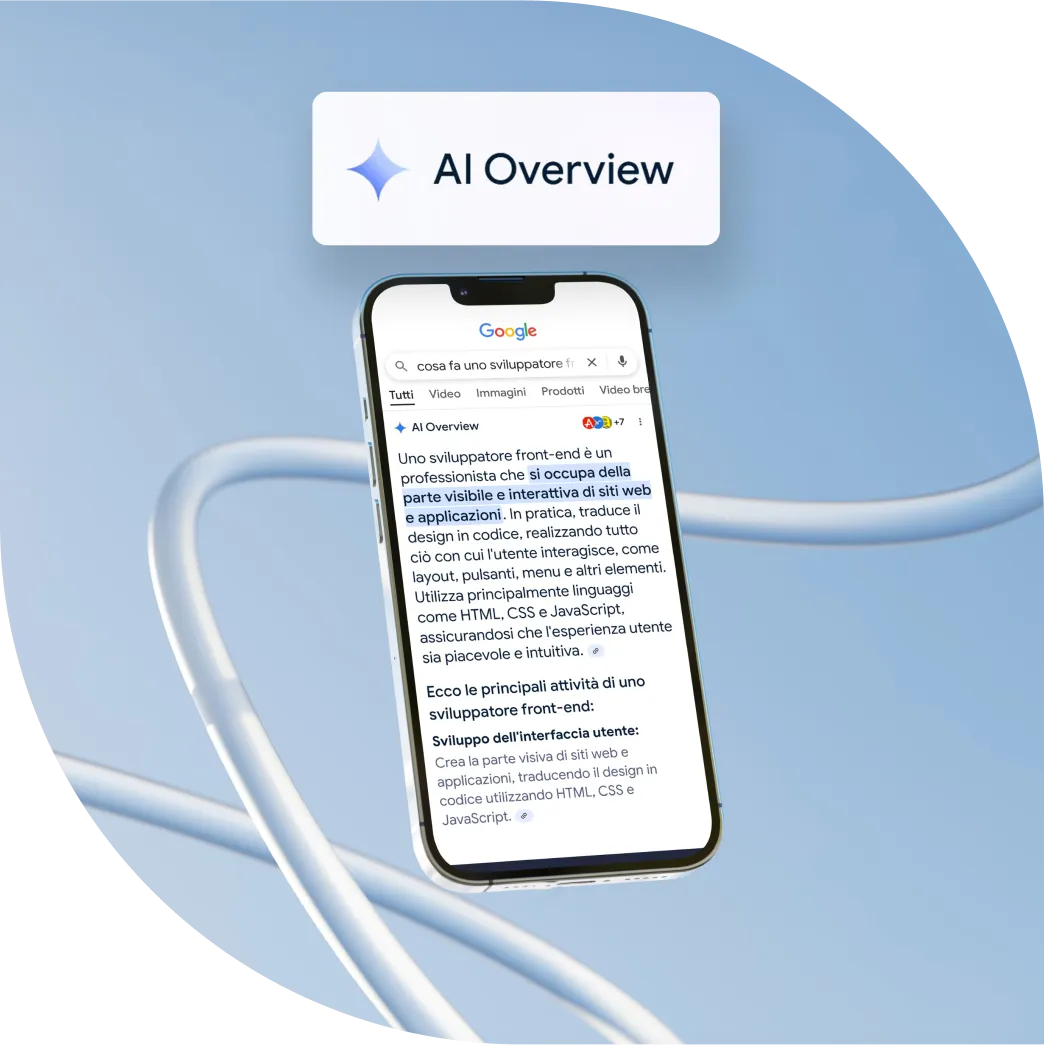
Lead generation now operates within a new landscape: artificial intelligence, generative answer engines, and the evolution of conversational search. Businesses must be present not only in traditional search results but also in responses generated by AI assistants. This means building structured, semantically clear content capable of capturing genuine user intent.
We therefore aim to provide a clear, in-depth, and up-to-date overview of modern lead generation and how to implement it in a strategic, measurable, and scalable way.
What is the lead generation process?
Lead generation is a strategic process aimed at identifying, attracting, and qualifying potential customers interested in your products or services. It is not simply about collecting contacts, but about engaging individuals who demonstrate genuine interest in what you offer.
In simple terms, it is the art — and above all the methodology — of turning visitors to a website, landing page, or advertising campaign into trackable, profiled contacts ready to begin a purchasing journey.
A landing page, meaning a page specifically designed to answer a user’s specific question or fulfill a promise made in an advertisement, becomes a central tool in this process. Every element of the page must guide the user toward a clear and measurable action.
A lead is therefore a person who has expressed interest in your company by voluntarily providing their data (name, email, phone number, or company information) in exchange for valuable content such as guides, ebooks, white papers, free demos, consultations, or operational tools.
Leads can be B2B, when the objective is to engage business decision-makers such as CEOs, marketing managers, or procurement officers, or B2C, when selling products or services directly to end consumers.
In B2B, decision cycles are often longer, more complex, and based on structured financial evaluations. In B2C, emotional drivers, pricing, and brand trust tend to play a more dominant role.
Types of Leads
Lead types differ based on the level of interest and engagement a potential customer has demonstrated toward a product or service. Understanding this distinction is essential to adapt communication, timing, and the intensity of sales actions.
Each lead is at a different stage of the buying journey, and treating them all the same drastically reduces the effectiveness of marketing and sales efforts.
Cold Lead
A cold lead is a contact who has never heard of your company or products, or has only superficial awareness. They have not yet developed clear awareness of the problem your service can solve.
They have not shown specific interest nor taken meaningful actions on your website or campaigns. At this stage, they are not ready to buy. Forcing a direct commercial proposal risks pushing them away.
This phase requires an informative and educational approach, with content focused on problem awareness: blog articles, introductory guides, SEO-optimized informational content, and materials addressing frequently asked questions.
Warm Lead
A warm lead has already heard about your company or products. They may have visited your website, downloaded free content, interacted with a chatbot, or read a case study.
They are interested but have not yet made a decision. They are evaluating alternatives, comparing solutions, and seeking reassurance.
Here, the approach must become more personalized and targeted. You need content that addresses specific needs, testimonials, case studies, proof of results, and segmented communications.
Hot Lead
A hot lead has demonstrated strong interest in your products or services. They have visited your website multiple times, requested specific information or a demo, or submitted a form with concrete inquiries.
They are ready to purchase and need only a final push: clarity in terms, reassurance about quality, and speed of response.
At this stage, responsiveness and the quality of the sales interaction are decisive.
In Practice (quick action)
If you see many leads but few SQLs, focus on MOF content and personalize the journey using behavioral segments to improve conversion rates.
Marketing Qualified Lead (MQL)
A Marketing Qualified Lead (MQL) is a contact who has shown sufficient interest to be considered ready for commercial interaction, but still requires structured validation.
This is not a subjective assessment. In modern marketing, an MQL is identified through measurable criteria: repeated downloads of high-value content, significant time spent on site, engagement with specific emails, and frequent visits to service or pricing pages all signal increasing maturity.
MQL qualification is increasingly supported by automated lead scoring systems, integrated within CRMs and powered by server-side tracking and AI-based predictive models.
An MQL is not yet ready for closing but represents a concrete opportunity requiring targeted and personalized nurturing.
Sales Qualified Lead (SQL)
A Sales Qualified Lead (SQL) is a lead that has passed both marketing and sales qualification. It has been validated by the sales team as ready for direct commercial contact.
Frameworks such as BANT (Budget, Authority, Need, Timing) are often used to verify:
- Availability of budget
- Decision-making authority
- Presence of a real need
- Defined purchasing timeline
The distinction between MQL and SQL is crucial to avoid wasting sales resources and to improve funnel efficiency.
Information Qualified Lead (IQL)
An Information Qualified Lead (IQL) is a contact who has shown interest in a specific topic or content category but has not yet demonstrated direct commercial intent.
This type of lead is particularly valuable for semantic segmentation. It helps identify which thematic areas generate the most attraction and enables the creation of highly personalized nurturing journeys.
In a context increasingly driven by conversational search and generative engines, understanding which specific questions bring qualified traffic is a competitive advantage.
Product Qualified Lead (PQL)
A Product Qualified Lead (PQL) is typical of SaaS, freemium, or trial-based models. It refers to a user who has directly used the product in a free or demo version and reached a meaningful usage threshold.
Qualification here is based not only on external digital behavior but on internal product usage data: frequency of use, activated features, and completion of key actions.
PQLs often show the highest conversion rates because they have already experienced the real value of the service.
The Sales Funnel: From Potential Customer to Purchase
What is the lead generation funnel? We can imagine the buying process as a funnel: at the top, a broad base of potential customers comes into contact with the brand through multiple digital touchpoints — organic search, advertising, social media, referrals, chatbots, or email campaigns.
As they move through the different stages of the buying journey, this audience narrows until it converts into actual customers. This path, known as the sales funnel, is no longer linear: today it is dynamic, influenced by repeated searches, multi-device interactions, and AI-generated responses.
Top of the Funnel (TOF)
At this stage, potential customers begin to recognize a problem or need. They are not yet searching for a specific provider, but for information.
Your goal is to capture attention by providing valuable, informative content that answers real questions. In-depth articles, detailed guides, educational content, and free resources are essential tools.
From an SEO and AEO perspective, this stage requires structured content with clear definitions, well-organized paragraphs, and direct language, so it can be easily interpreted by both traditional search engines and generative systems.
Middle of the Funnel (MOF)
At this point, potential customers better understand their problem and are actively searching for concrete solutions. They compare providers, read reviews, and analyze case studies.
This is when you must position your company as the ideal solution. Demonstrating expertise, reliability, and measurable results is essential.
Detailed case studies, technical webinars, white papers, solution comparisons, and testimonials become decisive tools.
Bottom of the Funnel (BOF)
In this final stage, potential customers are ready to make a purchasing decision. They seek reassurance, transparency, and clarity.
Your objective is to provide all the necessary information to reduce uncertainty: pricing conditions, onboarding processes, delivery timelines, and post-sales support.
Here, response speed, sales team efficiency, and CRM–marketing automation integration directly impact closing rates.
Common Mistake (to avoid)
Focusing only on lead volume creates inefficiencies. Prioritize qualified leads (MQL/SQL) and effective nurturing processes instead.

The Role of Content and Lead Nurturing
To guide potential customers throughout the entire lead generation funnel, it is essential to work in a structured way on two complementary fronts: producing strategic content and building a consistent, measurable lead nurturing system.
Content represents the entry point. Nurturing represents the continuity of the relationship. Without the first, demand is not generated. Without the second, interest does not turn into revenue.
High-Quality Content
Creating informative and engaging content (blog articles, operational guides, webinars, e-books, white papers, case studies) is essential to attract potential customers and position your company as an authority in its industry.
Each piece of content must be designed with a specific objective: answering a concrete question from the target audience. It is no longer enough to target a keyword. You must capture real user intent.
This means building content that:
- Provides direct and clear answers to frequently asked questions
- Is semantically structured with coherent headings
- Is readable both by users and AI-powered response systems
- Naturally guides users toward a call to action
Effective content must not only inform but also build trust. Trust is the true accelerator of lead generation.
Lead Nurturing
Once you have acquired a potential customer’s contact information — for example through a contact form, a guide download, or a demo request — the work is not finished; it has just begun.
Lead nurturing consists of sending a series of personalized and automated communications aimed at maintaining interest and guiding the prospect to the next stage of the funnel.
In B2B, where sales cycles can last months, nurturing is often the decisive factor between being remembered and being forgotten.
Email automation, integrated CRM systems, behavioral segmentation, dynamic retargeting, and proprietary AI chatbots trained on company content are now central tools for maintaining long-term engagement.
Effective Lead Nurturing Strategies
An effective lead nurturing system is not random. It must be structured around segmentation logic, personalization, and continuous measurement.
- Segmentation: divide leads into homogeneous groups based on interests, website behavior, funnel stage, and industry. Behavioral segmentation allows for relevant messaging and reduces communication noise.
- Personalization: adapt content and offers to the specific needs of each segment. Generic messages reduce open and conversion rates. Context-based messaging increases response probability.
- Automation: use marketing automation tools to create automated flows triggered by specific actions (downloads, repeated visits, email clicks, time spent on strategic pages). Automation enables scalability without losing control.
- Continuous Measurement: monitor open rates, click-through rates, conversion rates, and average time between first contact and deal closure. Without measurement, nurturing becomes perception rather than strategy.
In summary, generating quality leads and converting them into customers requires:
- Deep understanding of the target audience and its real needs
- Valuable content aligned with each funnel stage
- Long-term relationships built on trust and expertise
- Continuous funnel optimization by identifying friction points
“Content is not truly effective until it guides the user toward a measurable action.”
How to Create High-Quality Content That Converts
Creating content that converts is like weaving a complex fabric: every thread contributes to the strength of the whole. In digital marketing, the goal is not only to inform but to guide the user toward a concrete action.
The first step is to deeply understand your audience. Who are your potential customers? What problems are they trying to solve? What doubts are holding them back? The more accurate the understanding, the greater the ability to create content that truly resonates.
Once the audience is understood, it is necessary to define a clear objective for each piece of content. Are we aiming to generate leads? Strengthen positioning? Support an ongoing decision? Every piece must serve a precise function within the funnel.
Content should be informative, in-depth, and benefit-oriented. It is essential to avoid unnecessary technical jargon and focus on what truly matters to the reader: results, advantages, and risk reduction.
Search engine optimization should not be overlooked. Selecting coherent keywords, organizing content logically, using structured headings, and including clear definitions increases organic visibility.
In today’s landscape, it is also important to write in a way that allows information to be easily understood and cited by generative response systems. Complete sentences, explicit definitions, and clear paragraphs facilitate content extraction.
The call to action is the gateway to conversion. It must be clear, aligned with the content, and strategically positioned. It can invite users to download a guide, request a consultation, or subscribe to a newsletter.
Finally, experimentation is an integral part of the process. Testing different formats, lengths, call-to-action variations, and alternative headlines helps identify the most effective combination.

Building Effective Landing Pages
Quick Tip (fast optimization)
A/B testing CTAs and headlines significantly reduces landing page abandonment and increases lead conversions.
A landing page is a web page specifically designed to direct visitors toward a clearly defined action. It is not a generic website page: it is a strategic conversion tool.
Imagine clicking on an online advertisement: instead of landing on the homepage, you are directed to a page built specifically for that campaign, with a single defined objective such as subscribing to a newsletter, downloading an ebook, or requesting a consultation.
“A landing page with a single objective always outperforms a generic page full of distractions.”
Within your lead generation strategy, a landing page must be conceived as a controlled environment. Every element (headline, copy, visuals, form, call to action) should guide the user toward a decision, minimizing distractions and friction.
The primary objective must be singular and clear. Multiple goals on the same page create cognitive overload and reduce conversion rates.
The headline represents the first emotional and rational touchpoint. It must be clear, benefit-oriented, and consistent with the promise made in the advertisement or source content.
After capturing attention, the message must address the user’s problem. People connect with concrete solutions, not generic descriptions. Explaining how your product or service solves a real situation increases conversion probability.
Visual elements play a decisive role. High-quality images aligned with the message and brand positioning increase perceived reliability.
The call to action (CTA) is the core of the landing page. It must be visible, clear, and direct. The language should explicitly indicate the action: “Request a Consultation,” “Download the Guide,” “Book a Demo.”
The contact form must be simple. Requesting only essential information reduces friction. Each additional field statistically lowers completion probability.
The landing page must be optimized for mobile devices. Most interactions now happen on smartphones. A page that is not perfectly responsive compromises both performance and advertising investment.
Finally, continuous testing and optimization are essential. A/B testing headlines, visuals, CTAs, and layout progressively increases conversion rates.
Lead Generation Tools
Modern lead generation requires advanced tools. At our agency, we use technological solutions that reduce decision-making errors and improve campaign effectiveness.
For example, Neurons AI is a neuroscience- and AI-based platform that validates creative assets and content before launch by analyzing visual attention and cognitive impact.
Landing pages are often custom-developed and integrated via web services into clients’ CRM systems to ensure real-time data synchronization and accurate user journey tracking.
There are also specialized platforms for building and optimizing landing pages:
Unbounce offers advanced A/B testing tools and marketing software integrations.
Instapage includes heatmaps and team collaboration features.
Leadpages focuses on simplicity and fast implementation.
HubSpot integrates CRM, marketing automation, and landing page builders within a single ecosystem.
Integration between these tools and the CRM is essential to prevent data loss and enable accurate ROI analysis.
The Role of AI Chatbots
Thanks to artificial intelligence, chatbots have become central to lead generation. They are no longer simple automated responders but virtual assistants trained on company content, capable of understanding complex requests and guiding users toward action.
A proprietary AI chatbot can respond 24/7, provide detailed information about services, qualify users through targeted questions, and collect valuable data for the sales team.
In today’s environment, where users increasingly formulate conversational queries, the ability to capture intent in real time represents a significant competitive advantage.
AI-powered chatbots are now among the tools generating the strongest results in terms of qualified leads, especially in B2B contexts.
The Importance of Analytics in Lead Generation
Analytics transforms lead generation from an intuitive activity into a scientific system. Without data, decisions are based on perception. With data, every action becomes measurable.
Through analytics, it is possible to understand:
- Which channels generate the most qualified leads
- Which content produces the highest engagement
- Where drop-offs occur within the funnel
- The real cost per acquisition
- The campaign ROI
The sales funnel can be analyzed in detail, identifying friction points and implementing targeted improvements.
Server-side tracking has become central to ensuring data accuracy, overcoming cookie limitations, and improving attribution quality.
We have explored this topic in depth in a dedicated article on server-side tracking, which is essential for any truly measurable lead generation strategy.
In essence, analytics enables a deep understanding of the audience, content optimization, user experience improvement, and structured conversion rate growth.
Frequently Asked Questions about Lead Generation
What is lead generation in simple terms?
Lead generation is the process through which a company transforms anonymous visitors into qualified contacts by collecting their data in exchange for valuable content or offers. The goal is not just to obtain a contact, but to identify people genuinely interested in your products or services.
What is the difference between B2B and B2C lead generation?
In B2B lead generation, the target consists of companies and business decision-makers, with longer sales cycles and more complex evaluation processes. In B2C, the end customer is the consumer, and purchasing decisions are generally faster and influenced by price, trust, and emotional factors.
How are leads qualified (MQL and SQL)?
A lead becomes an MQL when measurable interest is demonstrated (downloads, repeated visits, interactions). It becomes an SQL when the sales team verifies concrete criteria such as budget, real need, and defined timing. Proper qualification reduces wasted commercial resources.
What are the best channels for generating leads?
The most effective channels depend on the industry, but generally SEO, targeted advertising, optimized landing pages, marketing automation, and AI chatbots are today’s main drivers. An integrated multi-channel approach produces stronger results than isolated strategies.
Why are landing pages essential in lead generation?
A landing page is designed for a single conversion goal. By eliminating distractions and guiding the user toward a specific action, it significantly increases acquisition rates compared to a generic website page.
What is lead nurturing and why is it important?
Lead nurturing is the process of guiding contacts over time through personalized and automated communications. It is essential because most leads are not ready to purchase immediately. Nurturing the relationship increases trust and conversion probability.
How do you measure the ROI of lead generation?
ROI is calculated by comparing revenue generated from acquired leads with the total marketing investment cost. Accurate measurement requires a reliable tracking system, preferably integrated and supported by server-side analytics.
What role does artificial intelligence play in lead generation?
Artificial intelligence supports lead generation through conversational chatbots, predictive lead scoring models, dynamic content personalization, and advanced behavioral analysis. It enables greater efficiency and better qualification.
What is the sales funnel in lead generation?
The sales funnel is the path a user follows from problem awareness to purchase decision. It generally consists of awareness, consideration, and decision stages. Each phase requires specific content and messaging.
How long does it take to see concrete results?
Timelines vary depending on industry, budget, and market competitiveness. In structured strategies, initial signals may appear within weeks, but full system maturity requires continuity, optimization, and ongoing analysis.
References, Notes and Bibliography
Practical examples, useful definitions, and authoritative sources to deepen the concepts mentioned in this article.
Reference Case Studies
Lead generation for energy and gas: the Gaxa case
A concrete example of strategy and funnel optimization in a highly competitive and regulated market.
Lead generation for the insurance market: the Groupama Assicurazioni case
A quality-oriented lead approach with performance measurement across the entire conversion journey.
Notes (quick glossary)
B2B
B2B, short for Business to Business, refers to commercial transactions between companies.
In this scenario, a company sells products or services to another company.
Negotiations are often more complex and involve multiple stakeholders.
Volumes may be high, but the number of clients is typically lower compared to B2C.
B2C
B2C, short for Business to Consumer, refers to transactions between a company and the end consumer.
Purchase decisions are often faster and influenced by price, brand trust, user experience, and emotional factors.
ROI
ROI stands for Return on Investment.
It measures how much profit is generated compared to the amount invested.
In lead generation, ROI is properly evaluated when attribution and tracking are robust (ideally server-side)
and when lead quality is considered alongside volume.
CTA
CTA, short for Call to Action, is an explicit invitation to take action.
Its purpose is to guide users toward the desired action (request info, subscribe, download, purchase),
reducing ambiguity and increasing conversion probability.
Continua a leggere
7 minutes of reading

11 minutes of reading

12 minutes of reading
And it consumes less energy.
To return to the page you were visiting, simply click or scroll.