The “Messy Middle” in Purchasing Behavior

The Messy Middle is even more relevant today because the buying journey no longer passes only through search, ads and reviews: it also passes through AI Overview, chatbots, marketplaces, social media, creators and digital communities.
In recent years, purchasing behavior has not simply become more complex.
It has become increasingly mediated by algorithmic systems and AI-generated responses.
Decisions are no longer shaped only through content, ads and reviews, but also through AI summaries, automated comparisons, marketplaces, creators, digital communities and recommendation systems.
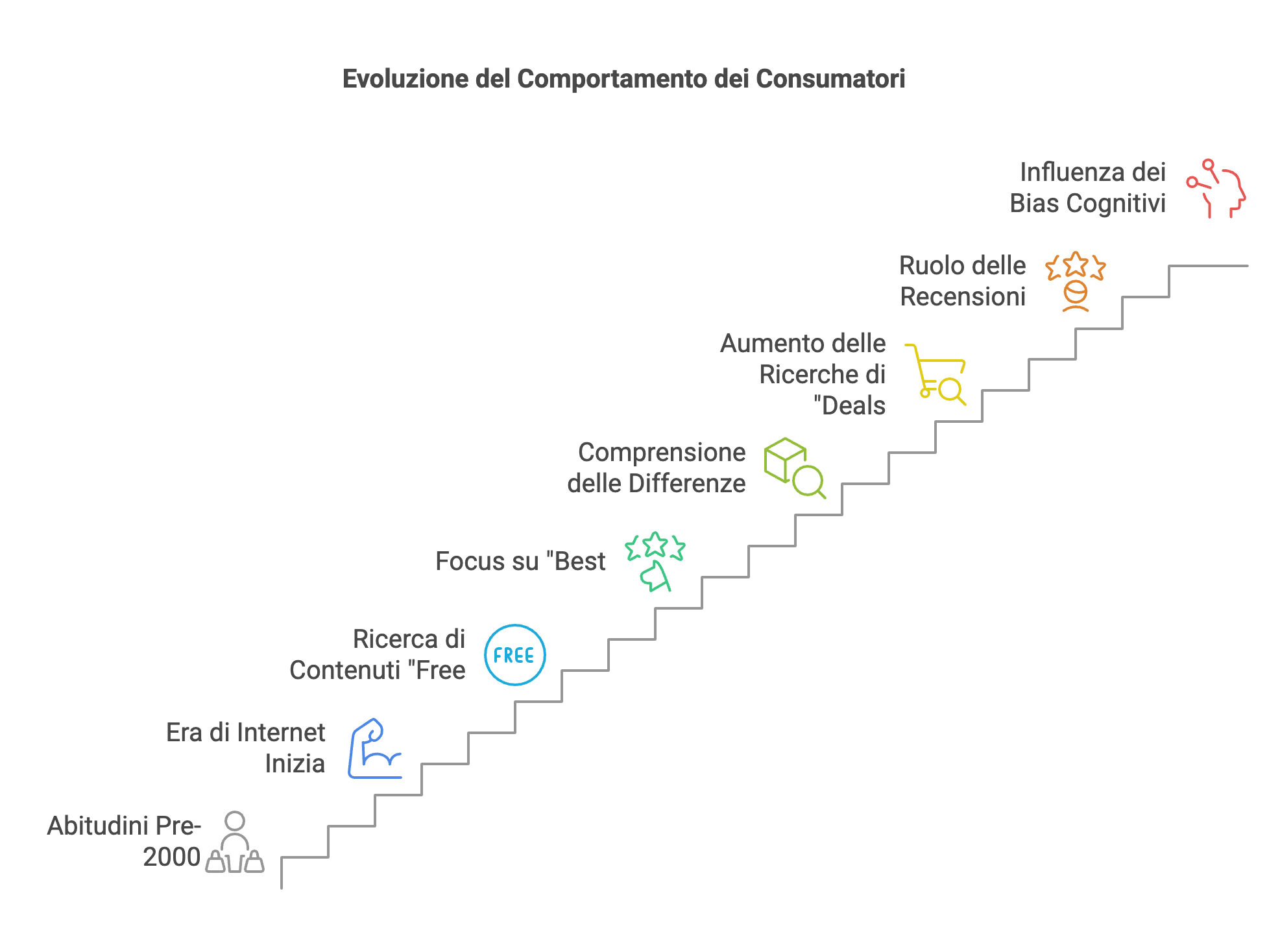
The journey that was once described as linear, from brand discovery to final decision, is now fragmented, iterative and influenced by predictive models.
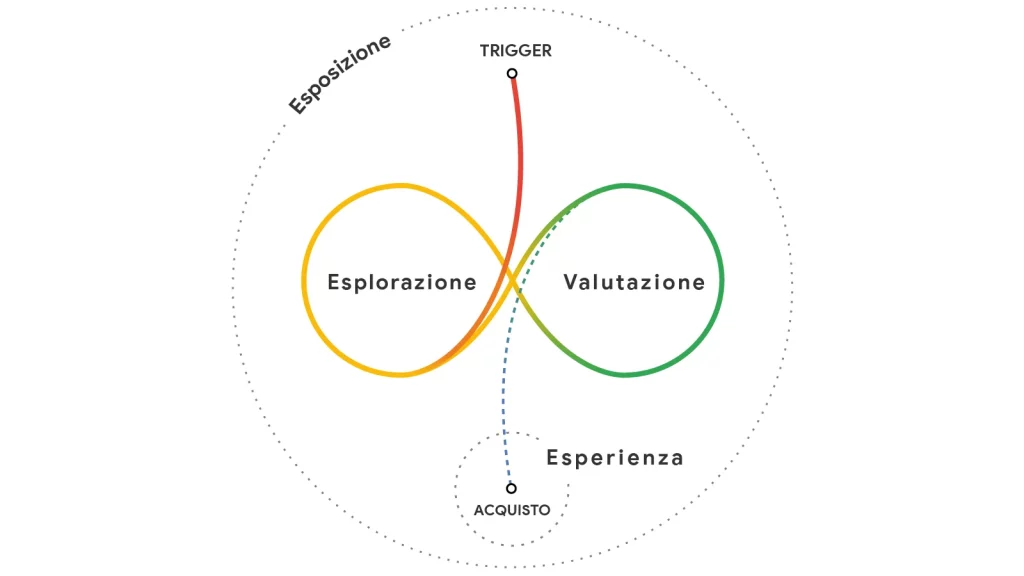
This intermediate space, built around continuous exploration and evaluation, has been defined by Google as the Messy Middle: a cycle in which people repeatedly move between exploration and evaluation before making a decision.
What is the Messy Middle?
The funnel model has long been used to represent the buying journey: awareness, consideration, conversion.
It is a useful framework, but it no longer reflects the reality of contemporary digital behavior.
The Messy Middle instead describes the phase in which users alternate between exploration and comparison before making a decision.
After an initial trigger — a search, a piece of content, an ad, an AI-generated response — consumers enter a dynamic evaluation cycle that may repeat multiple times.
At this stage, they move across reviews, comparisons, editorial content, marketplaces, communities and AI-generated summaries.
Users no longer move in a straight line, but inside a fluid environment where trust, cognitive biases and signals of authority influence the final choice.
The image above clearly shows how global search interest has evolved around keywords such as cheap and best associated with products and services.
Behind these queries, there is not simply an informational search, but a combination of cognitive biases, mental shortcuts and trust signals that shape the evaluation phase.
Understanding these mechanisms is even more strategic today.
Not because users are consuming more content, but because increasingly they are reading summaries generated by algorithmic systems that select, compare and interpret information before a brand is even visited directly.
This is why understanding cognitive biases no longer simply means writing more persuasive messages.
It means designing content, experiences and authority signals capable of influencing both human perception and the way generative systems interpret information.
The implications of the Messy Middle for marketing strategies
The Messy Middle is not a behavioral theory to observe.
It is a competitive space to actively own.
This fundamentally changes how marketing, content, data and advertising must work together.
- Presence across traditional and AI touchpoints:
it is no longer enough to be visible on search engines.
Brands must also be present in marketplaces, communities, social media and within systems such as Zero-Click Search and AI Overview. - User experience and trust:
the user experience must reduce friction, ambiguity and uncertainty during evaluation, making decision-making easier. - Citable content:
guides, comparisons, FAQs, structured data and authoritative content increase the likelihood of being used as a source by generative systems. - Cognitive biases and proof:
social proof, authority, scarcity, immediacy and comparisons help make brands more convincing during the evaluation phase. - Cross-channel measurement:
micro-conversions, CRM integration, attribution models and server-side tracking make it possible to understand the real contribution of each touchpoint.
In the Messy Middle, the winner is not the brand that generates the most traffic.
The winner is the brand that becomes the reference point at the exact moment when users — or algorithms — are synthesizing alternatives.
Messy Middle and Artificial Intelligence: what is changing
The introduction of AI Overview, AI Mode, conversational search engines and generative systems into search engines and digital platforms is fundamentally reshaping the Messy Middle.
While exploration previously happened mainly through websites, reviews, comparison platforms and content distributed across feeds, today an increasing part of the decision-making process takes place directly within algorithmic interfaces that synthesize, filter and interpret information.
Zero-Click Search, AI Overview, conversational assistants and language models synthesize alternatives, highlight differences and suggest options before users even visit a website.
This means that the Messy Middle is no longer simply a space between pieces of content, but a space between algorithmic interpretations.
From ranking to citation
In the context of generative search, ranking is no longer enough.
It becomes essential to be understandable, structured, recognizable as an entity and citable.
The content that influences the Messy Middle is the content that successfully enters AI-generated summaries, automated comparisons, generated recommendations and conversational response systems.
This shifts the focus from SEO optimization alone toward the broader concept of algorithmic visibility: clear information architecture, recognizable entities, structured data, intent-driven content and semantic consistency.
Cognitive biases and predictive systems
The cognitive biases identified by Google within the Messy Middle — such as social proof, authority bias and scarcity — do not disappear with AI.
They are reinterpreted by predictive systems.
Generated responses tend to favor authoritative sources, consensus signals and structured content.
In other words, artificial intelligence does not eliminate the Messy Middle.
It compresses some of its phases, accelerating decision-making when signals are strong and consistent.
AI does not eliminate the Messy Middle.
It makes it faster, more synthetic and more dependent on the semantic quality of content.
In a generative environment, the winners are those who design coherent systems, not those who simply publish more.
HT&T Consulting – AI & Decision Making
Strategy in the age of AI
Understanding the Messy Middle means designing content that operates across three levels: exploration (SEO and search), evaluation (comparisons, proof, data) and algorithmic synthesis (AEO and GEO).
Competitive advantage is no longer about owning a single touchpoint.
It is about building an infrastructure capable of influencing the decision-making process across organic search, advertising, marketplaces, communities and generative systems, even when users do not directly visit the website but instead receive an AI-mediated response.
An approach that today requires an integrated vision across SEO, AEO, GEO, structured data and advanced measurement.
A practical example of the Messy Middle in the age of AI
Imagine managing an eCommerce business selling sustainable fashion.
A potential customer no longer simply sees a post on Instagram: they discover the brand through shared content, an AI-generated response during research or an automated comparison between brands.
When they search for “best sustainable fashion brands,” they do not find only traditional organic results.
They read an AI-generated summary comparing materials, certifications, reviews and pricing positioning.
Your brand may appear in that summary — or it may not.
If the website content is structured, clear and authoritative, it gets cited or used as a source.
If it is not, it remains invisible even if it ranks well.
The customer then continues researching: visiting the website, reading reviews, checking marketplaces, consulting Reddit communities or Telegram groups, verifying environmental certifications and comparing return policies.
At the same time, they receive remarketing ads and watch product comparisons on YouTube.
In this non-linear journey, the Messy Middle moves across:
traditional search, AI responses, editorial content, social proof and paid media stimuli.
When the purchase decision is finally made, it is not the result of a single touchpoint, but of the consistency of signals gathered throughout the entire journey.
The Messy Middle as a strategic opportunity
In today’s environment, the Messy Middle is not simply a phase to manage.
It is a space to intentionally design.
- Visibility in search and AI-generated responses: structured content, clear data and authority signals increase the likelihood of being cited by generative systems.
- Consistency between organic and paid: paid media amplifies what builds trust during the exploration phase.
- Owning cognitive biases: social proof, authority, scarcity and comparisons influence the evaluation phase.
- Data infrastructure and measurement: analytics, CRM and attribution models make it possible to understand the real contribution of each touchpoint.
The Messy Middle is not won with a single piece of content or a single campaign.
It is won by building a coherent system where SEO, performance marketing, content and AI work together.
The difference is not made by the brand that appears most frequently in users’ feeds, but by the brand that successfully influences the decision synthesis phase, even when users do not directly visit the website but instead receive an AI-mediated response.
From chaotic journeys to designed systems
The Messy Middle is not a deviation from the buying journey.
It is the real buying journey.
Decisions are no longer born from a linear funnel, but from a continuous interaction between search, content, comparisons, communities, marketplaces, advertising and AI-generated responses.
Users explore, evaluate, abandon, return, compare and synthesize.
Very often, they do so through systems that filter and interpret information on their behalf.
In this environment, being present is no longer enough.
Brands need to design a coherent infrastructure where content, SEO, performance marketing and authority signals work together to influence decision-making.
Those who build systems capable of being relevant, citable and trustworthy throughout the entire journey do not suffer market complexity.
They turn it into a competitive advantage.
And HT&T can help you on that journey.
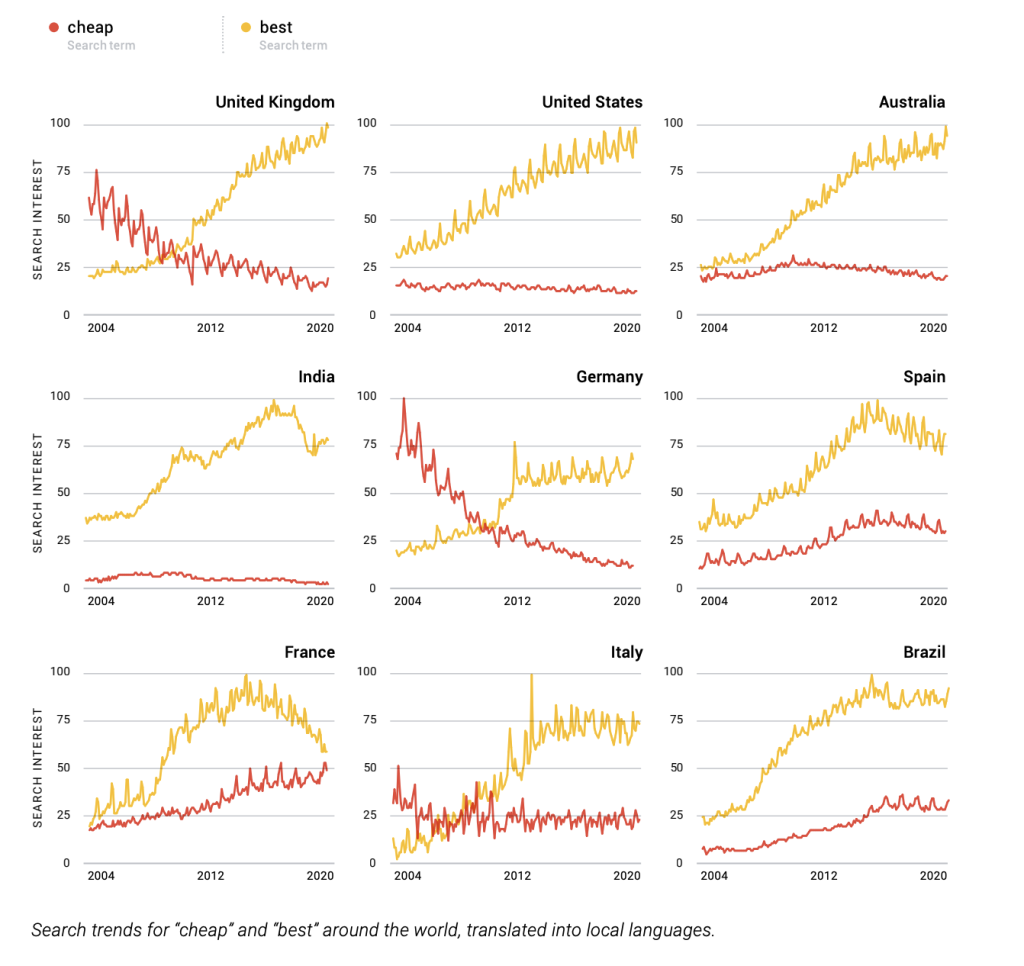
The image above clearly illustrates what we are talking about, showing how worldwide search interest has changed for the keywords “economico” (affordable) and “migliore” (best) associated with a product or service. Understanding these cognitive biases is essential for anyone operating online, because by deeply understanding them, we can use them to create more effective messages and strategies in the “messy middle.”
Implications for Marketing Strategies
The concept of the “messy middle” has significant implications for marketing strategies. Here are some key points to consider:
- Brand presence: it is crucial to be present on all touchpoints where consumers look for information, from search engines to review websites, social media, and other channels.
- User experience: providing a smooth and intuitive user experience that facilitates the exploration and evaluation of options is essential to guide consumers toward a purchase.
- Valuable content: create informative, high-quality content that answers consumers’ questions and helps them make a decision.
- Using cognitive biases: incorporate cognitive biases into your marketing messages to make offers more persuasive (e.g., use social proof with positive reviews, offer incentives like free shipping, create urgency with limited-time offers).
- Measurement and optimization: closely monitor the performance of marketing campaigns and analyze consumer behavior in the “messy middle” to optimize strategies and improve results.
A Practical Example of the Messy Middle
Imagine you run an e-commerce store for sustainable clothing. A potential customer sees your Instagram post highlighting garments made from recycled materials. Interested, they visit your site but are not yet ready to buy. They then search on Google for reviews and comparisons with other brands, read influencer opinions, and perhaps ask a friend who has already purchased similar products.
After some time, they see your Facebook ad offering a discount on a first purchase and remember your brand. They return to your site, find a detailed FAQ page about materials and production processes, read enthusiastic testimonials from other customers, and decide to move forward. However, they want to get a good deal, so they look for a promo code online. If they find one, they verify that it works and, motivated, proceed with the purchase.
All of this happens in a chaotic journey of discovery and evaluation, but by maintaining a presence across various touchpoints and providing comprehensive information, you increase the likelihood of a final conversion.
The “Messy Middle” as an Opportunity
The “messy middle” is not just a challenge but also an opportunity for brands. Understanding and managing this phase of the purchase process allows you to:
- Increase brand awareness: being present during exploration and evaluation moments increases brand visibility and memorability.
- Influence purchase decisions: by leveraging cognitive biases and providing an optimal user experience, you can guide consumers toward choosing your brand.
- Build long-term relationships: giving consumers the information and support they need during the “messy middle” fosters trust and loyalty.
In conclusion, the “messy middle” represents a paradigm shift in how we understand purchasing behavior. Embracing this new model and adapting your marketing strategies accordingly is crucial for success in the digital age.
From decision-making chaos to designed systems
To respond to this evolution in purchasing behavior, at HT&T Consulting we did not simply update individual services.
We rethought the way teams work, moving beyond traditional vertical departments to build interdisciplinary teams designed around the customer’s decision-making journey.
In a context where the Messy Middle now moves across search engines, marketplaces, social media, communities, AI Overview, AI Mode and conversational systems, every disconnect between branding, content, data, advertising and user experience can become a gap left open to competitors.
That is why we have built an integrated approach that combines principles of behavioral science, information architecture, advanced measurement and content designed not only to be visible, but also understandable, authoritative and citable within algorithmic systems.
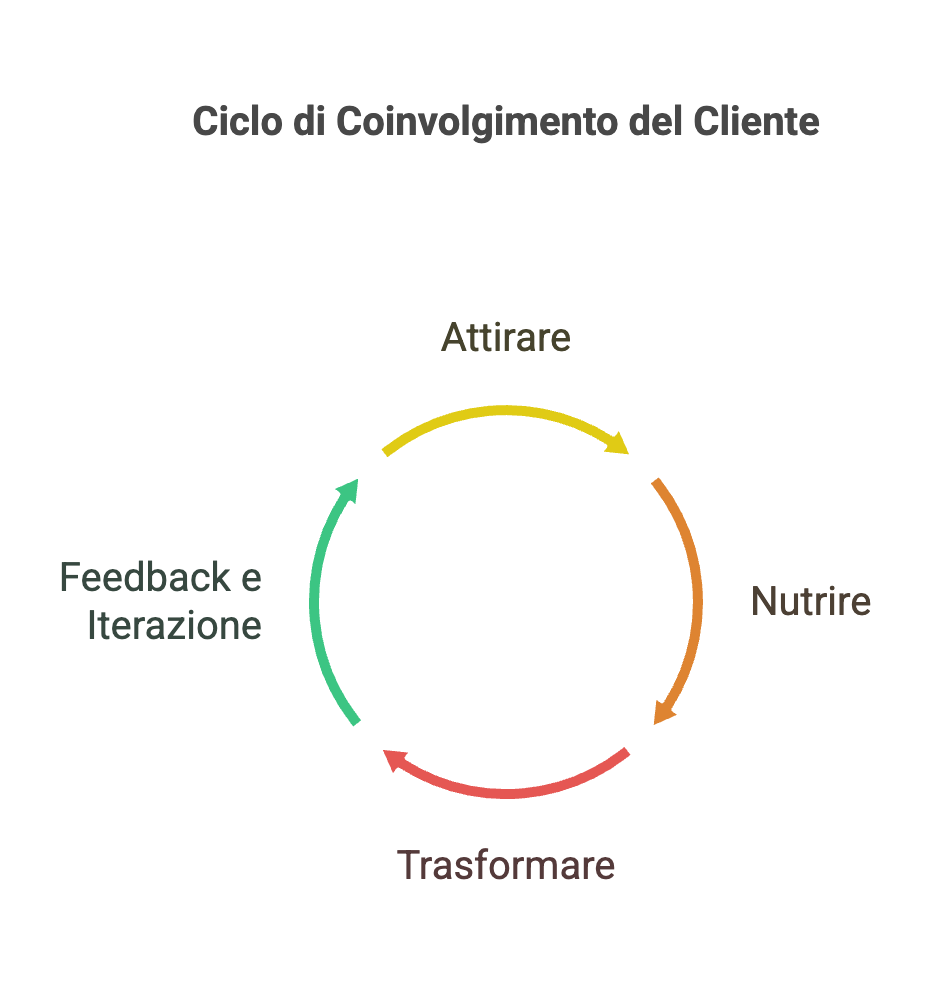
UX and UI specialists, measurement and optimization specialists, we are among the very few agencies in Italy certified in Google Marketing Platform, SEO specialists, performance marketers, strategists and AI consultants work together continuously to build a process capable of attracting, nurturing and converting demand throughout the entire decision-making journey.
We no longer simply talk about funnels.
We talk about Attract, Nurture & Convert within an ecosystem where decisions can be influenced by organic content, advertising, reviews, communities or responses generated by artificial intelligence.
That is why we have developed a dedicated onboarding process, because the initial phase of positioning, data collection, content architecture and campaign setup is what determines the quality of the entire system in the months ahead.
In AI-first marketing, the winners are not those who publish more, but those who build coherent, measurable systems capable of influencing the trigger moment before the need is even consciously expressed.
Massimiliano Baldocchi, CEO HT&T Consulting
The digital market continues to evolve.
Algorithms, platforms, touchpoints and search models are constantly changing.
That is why adaptation is no longer enough.
What brands need today is an infrastructure capable of evolving together with human behavior.
Frequently asked questions about the Messy Middle
What is the Messy Middle in consumer behavior?
The Messy Middle is the non-linear phase of the buying journey in which consumers continuously move between exploration and evaluation before making a decision. Introduced by Google, the concept describes the complex space where cognitive biases, content, touchpoints and trust signals influence the final choice.
Why is the traditional marketing funnel no longer enough?
The traditional funnel suggests a linear path from awareness to conversion, but real buying behavior is much more fragmented. People compare alternatives, read reviews, return to previous options and evaluate multiple trust signals before deciding.
Which cognitive biases influence the Messy Middle?
The Messy Middle is influenced by biases such as social proof, authority bias, category heuristics, scarcity, the power of free and the power of now. These mental shortcuts help people simplify decisions when they are exposed to too many options.
What role do SEO and content play in the Messy Middle?
SEO and content help brands appear during the exploration and evaluation phases. Guides, comparisons, FAQs, reviews and structured answers help users understand alternatives and build trust while the decision is still open.
How does paid advertising support the Messy Middle?
Paid advertising reinforces brand memory and trust while users compare different options. Search ads, remarketing, Demand Gen, social ads and sponsored content can help brands remain visible during key evaluation moments.
How does AI change the Messy Middle?
AI changes the Messy Middle by introducing synthesized answers, automated comparisons and AI-generated recommendations. Visibility no longer depends only on search rankings, but also on whether a brand can be understood, cited and recommended by generative systems.
Does the Messy Middle also apply to B2B?
Yes. In B2B, the Messy Middle is often even more complex because decisions involve multiple stakeholders, longer evaluation cycles, internal validation and higher perceived risk.
How long does the Messy Middle last?
There is no fixed duration. The Messy Middle can last a few minutes for low-involvement purchases or extend for weeks or months when the decision is complex, expensive or shared between multiple people.
How can brands measure the Messy Middle?
Brands can measure the Messy Middle by analyzing micro-conversions, assisted conversions, time on site, repeat visits, multi-touch interactions, CRM data and attribution models across the decision-making journey.
Why is the Messy Middle strategic in the age of AI search?
The Messy Middle is strategic because decisions are increasingly shaped by search engines, social platforms, marketplaces, communities and AI-generated answers. Brands need integrated content, performance, data and AEO/GEO strategies to influence how users and algorithms evaluate alternatives.
Sources and references
Google – The Messy Middle
Official Google research on non-linear purchasing behavior and the exploration and evaluation dynamics that shape decision-making before conversion.
Google – Decoding Decisions
Research exploring cognitive biases such as social proof, authority bias and scarcity, and how they influence consumer choices within the Messy Middle.
BCG – The Consumer Decision Journey
Analysis of how traditional funnel models have evolved toward more dynamic, cyclical decision-making journeys influenced by multiple touchpoints.
IPA – The Long and the Short of It
Research on the balance between brand building and performance marketing, essential for understanding the strategic role of the Messy Middle.
Nielsen – Trust in Advertising
Global research on trust across different forms of communication, useful for understanding exploration, validation and trust-building dynamics.
HT&T Consulting – AI Observatory
Proprietary research focused on algorithmic visibility, decision-making and the integration between content, performance marketing and AI-generated responses.
Continua a leggere
10 minutes of reading

17 minutes of reading

13 minutes of reading

And it consumes less energy.
To return to the page you were visiting, simply click or scroll.