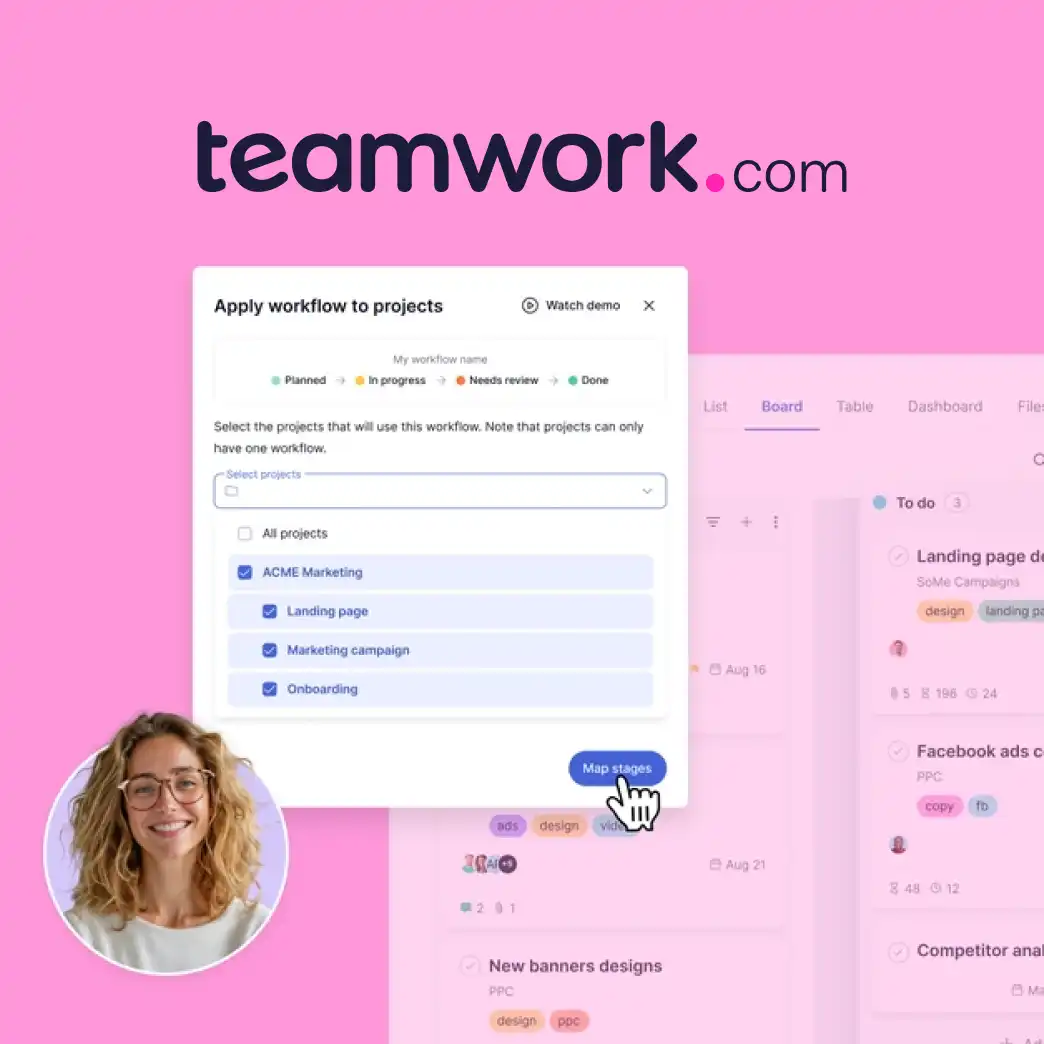
Why at HT&T we chose Teamwork to manage projects in our agency
Introducing a project management platform is not a tool choice — it is a governance decision.
At HT&T we chose Teamwork
because it allows us to manage delivery, collaboration and — above all — time tracking
with a level of clarity that truly matters as projects grow and complexity increases.
A decision for decision-makers: operational control, capacity and margins
If you are a CEO, COO, Head of Operations, Delivery Lead or Marketing Director who has to make execution work,
you already know where systems tend to break: requests coming from too many channels, priorities changing mid-stream,
activities expanding without anyone clearly seeing the impact on timelines and workloads.
The problem is rarely a lack of tasks.
The real problem is that without a system, you lose early warning signals:
scope creep, overloaded teams, accumulating delays and eroding margins.
For us, the question was never which platform has the most features,
but rather: which platform helps us make better decisions
about capacity, timing and delivery quality — without weighing down daily work.
Quick overview: the main platforms and when they make sense
Before choosing Teamwork, we evaluated the most widely used platforms.
We list them here with links, because comparisons are often faster by seeing the tools rather than reading descriptions:
- monday.com: the most well-known platform, highly visual and flexible, often chosen for how easily boards and processes can be customised.
- Asana: very strong in task management and internal collaboration, useful when the focus is orchestrating cross-functional workflows.
- ClickUp: an “all-in-one” approach for operational teams, with many features concentrated in a single environment.
- Jira: the reference for tech and development teams, especially when work is managed with agile methodologies and backlogs.
- Notion: a highly versatile modular workspace, excellent for knowledge bases and documentation; delivery management depends heavily on how it is configured.
- Teamwork: designed for teams that work “by project” and often “for clients”, with a setup that emphasises time tracking, control and operations.
All of them can be valid.
The difference emerges when your priority is managing projects and people across multiple engagements,
while keeping timelines, workloads and profitability under control.
This is where Teamwork made the difference for us.
Why Teamwork: not a task manager, but a delivery system
We did not choose Teamwork because it has more features.
We chose it because it is built around a typical need of agencies and project-based organisations:
making work measurable and governable.
As you grow, people can no longer keep everything in their heads and scattered spreadsheets stop being enough.
You need a structure that can handle complexity and make it easy to answer operational questions:
where we are, what is at risk of slipping, where estimates are being exceeded, who is overloaded.
In practice, the difference is made by the whole system:
client and project structure, clear responsibilities, a shared overview and orderly collaboration.
But the element that truly changed the game for us was one thing:
time tracking.
The real difference for us: time tracking (that people actually use)
Time is the most expensive and most underestimated variable.
In many organisations it is “estimated”, “reconstructed” or tracked inconsistently.
The result is that projects appear under control — until they suddenly are not.
Teamwork makes time tracking a natural part of daily work, directly linked to real activities and project context.
For a decision-maker, this means three very concrete things.
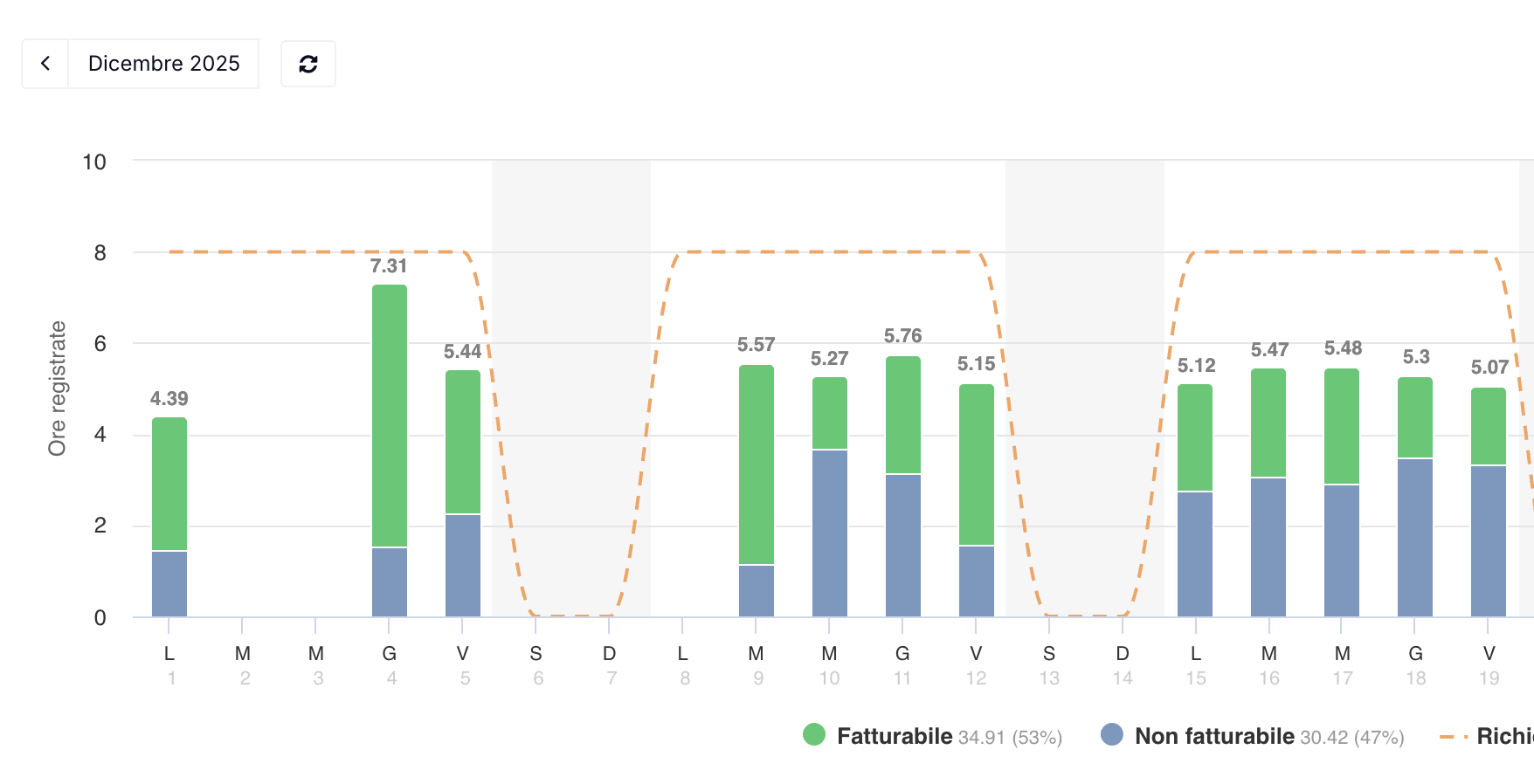
First: you can understand where team capacity actually goes, distinguishing high-value work from dispersion.
Second: you can estimate future projects more accurately, based on real historical data rather than perceptions.
Third: you can detect deviations early, before they turn into delays or margin erosion.
There is also a cultural aspect:
time tracking is not controlling people.
It is controlling the system.
It helps protect team sustainability and maintain realistic commitments towards clients and stakeholders.
What really changes in a company when you introduce Teamwork
The first difference is the client and project structure:
each client has a clear perimeter, each project has tasks, milestones, files and conversations.
Everything stays organised, traceable and contextualised.
This reduces dependency on “key people who know everything” and makes the organisation more resilient over time.
The second difference is clarity of responsibility.
When every activity has an owner, a deadline and a priority,
typical gaps shrink dramatically: stalled tasks, unclear handovers,
delays caused by “I thought someone else was handling it”.
This is not bureaucracy — it is efficiency.
The third difference is the high-level view for those coordinating.
Dashboards and operational views make it possible to understand progress,
workloads and bottlenecks without constantly chasing the team.
This enables a more mature management model: less reactive, more preventive.
Finally, collaboration becomes orderly.
Comments, files and updates stay attached to activities,
reducing noise from emails and parallel chats.
Less duplicated information means fewer misunderstandings and greater speed,
especially when multiple functions work on the same project.
How we use it at HT&T
At HT&T we use Teamwork as a central operational hub.
It is not an “extra” tool: it is where planning, execution and control converge.
We use it to structure projects consistently, coordinate different teams
(marketing, design, development and data),
monitor real progress and read workloads clearly.
Time tracking is integrated into the workflow:
it helps us reason about estimates, deviations and capacity,
and build a reliable historical dataset that makes future decisions faster and more accurate.
Activity history is also crucial:
when a project evolves, being able to reconstruct what was decided — and why —
avoids waste and misunderstandings.
Who we recommend Teamwork to (and when it makes the most sense)
We recommend Teamwork when work is organised by projects, often for clients,
and when time is a real economic variable.
It is particularly suitable for agencies, consulting firms and internal teams
managing many parallel initiatives who want more control without overloading operations.
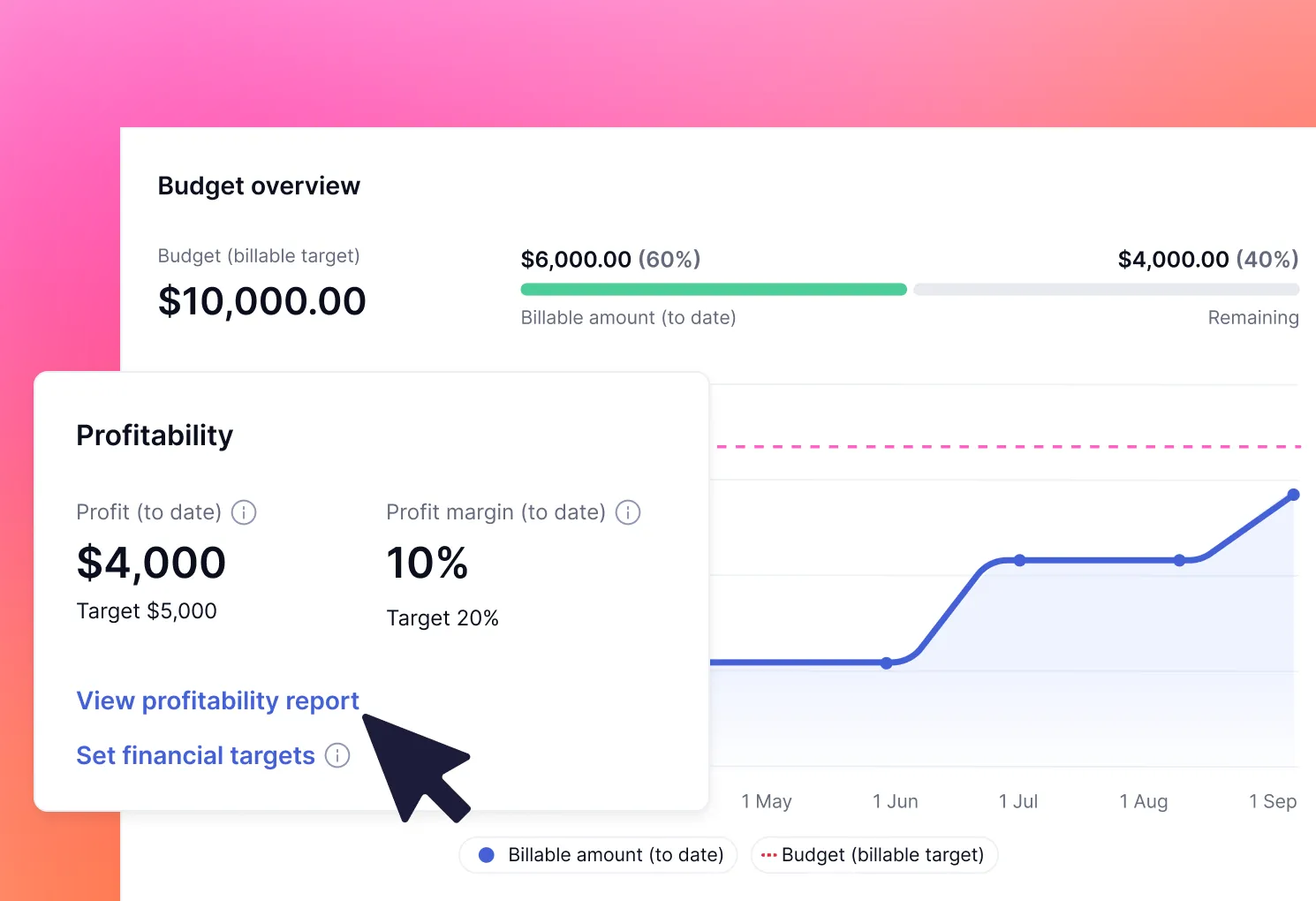
Knowing how many hours are spent on a project or a client,
how loaded people and teams are,
where you are profitable and where you are losing money
are critical insights — alongside classic tools such as task progress, Gantt charts and planning views.
If you only need an internal checklist, lighter tools may be enough.
Teamwork delivers its real value
when you need a system that brings together delivery,
responsibility, collaboration and a reliable reading of time spent.
Adoption and implementation: where tools often fail (and how to avoid it)
Most failures are not caused by software, but by adoption.
The pragmatic advice is simple:
define a few minimum rules and apply them consistently.
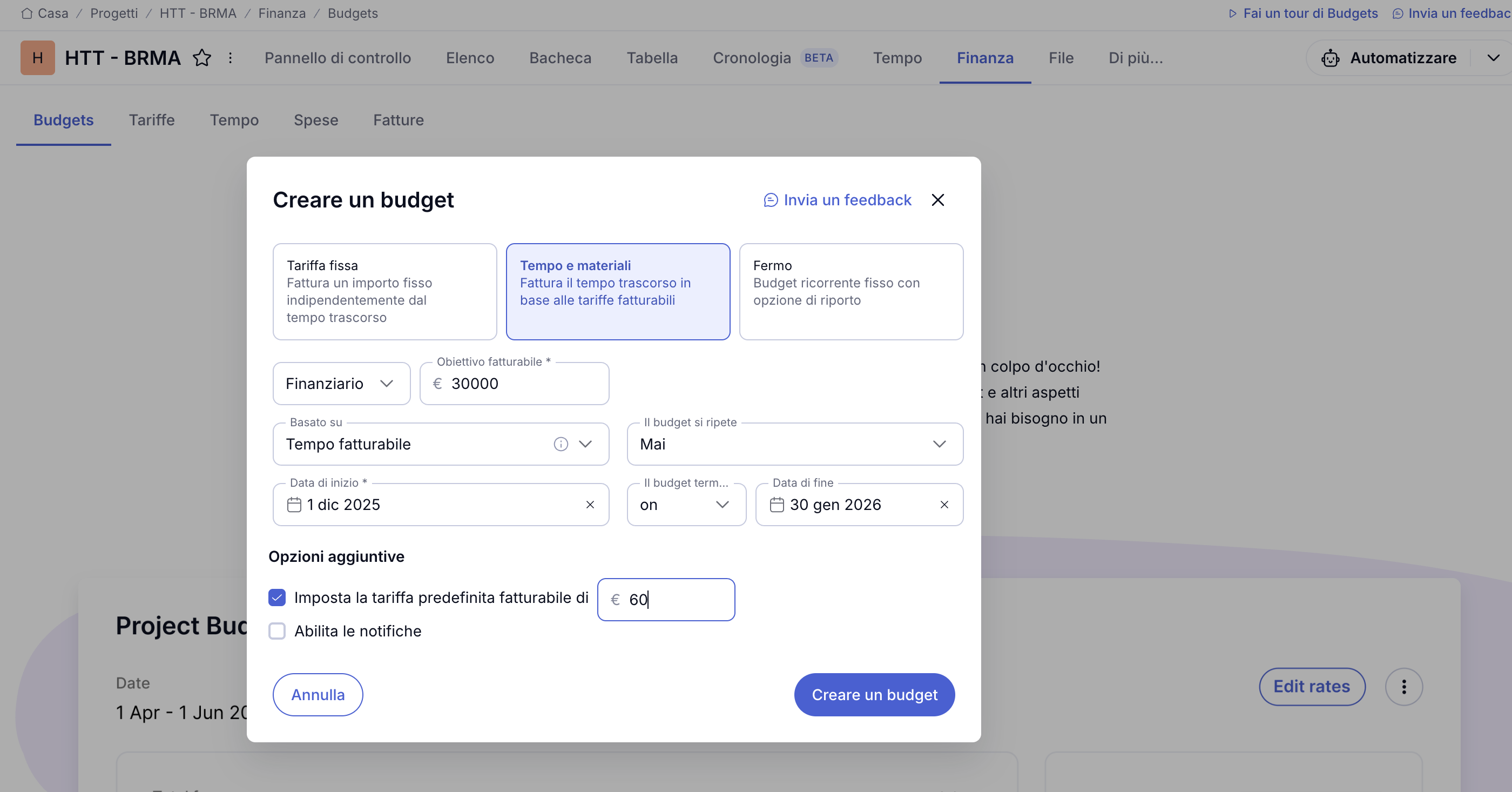
A project model (template), clear criteria for ownership and priorities,
and light discipline around time tracking.
With these foundations, the platform becomes an accelerator.
Without them, it is just “another place to update things”.
If you want to introduce Teamwork in your company,
adoption should be designed as a journey:
coherent initial configuration, team onboarding,
a pilot phase on selected projects,
and only then rollout to the rest of the organisation.
This is the difference between installing a tool and improving a system.
We are a Teamwork partner: if you want a concrete evaluation, let’s talk
Thanks to deep, hands-on experience with the platform,
at HT&T we became a Teamwork partner
and use it daily in real operations.
If you are evaluating a project management platform
and want to understand whether Teamwork fits your context
(processes, teams, project types, time tracking needs),
get in touch.
We offer a practical comparison,
without fluff and without demo-driven promises.
The goal is to help you make an informed decision
and set adoption up the right way.
Teamwork FAQ for companies and agencies
Is Teamwork suitable for an internal (non-agency) team?
Yes, especially if the team works on projects with multiple stakeholders
and needs visibility on progress, responsibility and timing.
We have trained, for example, a design team in a manufacturing company
and a research team in a pharmaceutical company.
If you only manage simple internal tasks,
lighter tools may be sufficient.
What is the advantage of Teamwork compared to a task manager?
Teamwork is not just about “checking off tasks”.
It helps you govern delivery and operations:
client and project structure, clear responsibilities,
high-level visibility and — above all —
integrated time tracking to improve estimates
and protect margins and capacity.
Why is time tracking so important for decision-makers?
Because it turns time into data:
you can see where effort is concentrated,
measure deviations, estimate more accurately
and prevent margin erosion.
It is system control, not people control.
How do you prevent the team from perceiving time tracking as control?
By clearly communicating the purpose:
improving estimates, reducing overload
and protecting sustainability.
It works when data is used to optimise processes and workloads,
not to “punish” individuals.
What are the most common mistakes when adopting a project management platform?
The most common are:
configuring without an operating model,
not defining minimum rules (owners, deadlines, priorities),
skipping onboarding,
and not starting with a pilot phase.
The result is a tool that duplicates emails and chats.
Is Teamwork useful when managing many parallel projects?
This is one of the contexts where it delivers the most value:
project and client structure, history, time tracking
and visibility on workloads and bottlenecks
help maintain control as complexity grows.
Does it make sense to involve clients in Teamwork?
It depends on the delivery model.
If you want to increase transparency
and reduce unnecessary handoffs,
it can make a lot of sense,
provided permissions are well configured
and collaboration stays tied to activities,
avoiding noise.
How do you measure success after adopting Teamwork?
Typically through concrete indicators:
reduced coordination overhead,
better on-time delivery,
more accurate estimates,
improved workload balance
and clearer project visibility for coordinators.
How long does it take to fully adopt a platform like Teamwork?
It depends on size and process maturity.
In general, it is better to start with a minimal rule set,
onboard the team, pilot on selected projects,
and then scale.
The goal is to avoid a “big bang” adoption
that often triggers rejection.
How can HT&T support Teamwork adoption?
We can support evaluation,
initial configuration (templates and structure),
team onboarding
and definition of minimum operating rules,
with particular focus on time tracking
and capacity and priority governance.
Continua a leggere
9 minutes of reading

12 minutes of reading

23 minutes of reading

And it consumes less energy.
To return to the page you were visiting, simply click or scroll.